

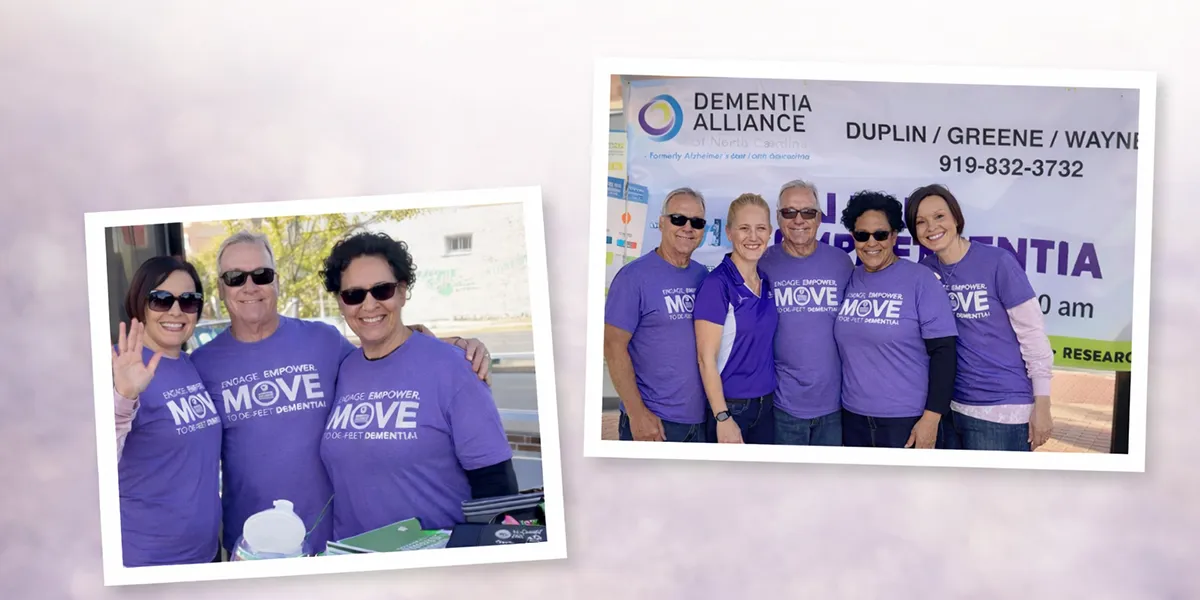
On the first Tuesday of every month, in a room at Duplin County Senior Services, something steady and quiet has been happening since 1995.
Chairs are pulled into a circle. Stories are shared. Sometimes there is laughter. Sometimes there are tears. Often, there is both. This is the Alzheimer’s/Caregiver Support Group of Duplin County – the longest-running support group connected to Dementia Alliance of North Carolina.
And for the caregivers who walk through those doors, it has become something more than a meeting. It has become a lifeline.
“We understand the value of simply having someone who listens.”
Melisa Brown and Frankie Hobbs have been part of this group from the very beginning. Between them, they have spent decades not only supporting caregivers but being caregivers.
Frankie Hobbs began with Duplin County Senior Services in December 1992 as an In-Home Aide Supervisor and Outreach Worker. She is the epitome of a caregiver in the truest sense. She lovingly cared for her husband, mother, father, siblings, and now assists with her nephew.
Melisa S Brown began with Duplin County Senior Services in September 1993 as the Aging Program Coordinator and was named Director in 2015. She has always enjoyed being around seniors, as she loved spending time with her grandparents. She cared for her father who passed away in 2016. While he was here, she “cared for the one that cared for me.” Fast forward to today, and she is caring for her mother, which has brought challenging seasons that continue.
That lived experience shapes everything about the group. “As facilitators, we truly have the heart for the cause,” said Melisa. “In our own families, we serve in different stages of caregiving. We understand the value of simply having someone who listens.”
There is no script. No pressure to have the right words. Just space.
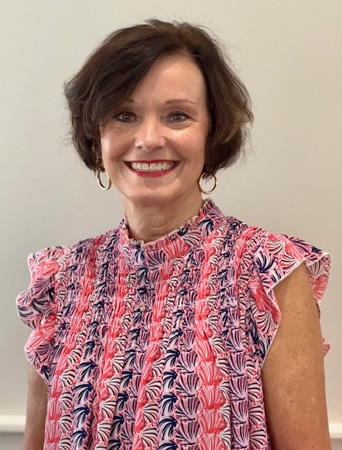
Melisa Brown
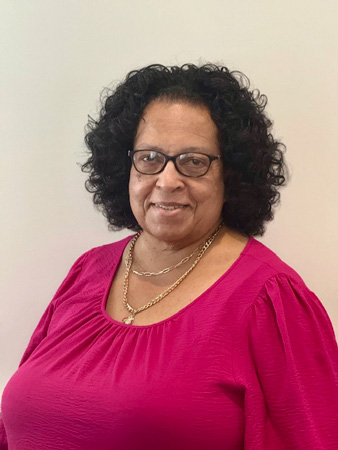
Frankie Hobbs
A group was built because caregivers needed somewhere to go
Back in 1995, the need was clear. Caregivers in the community were struggling, but didn’t always have the words or support to talk about it.
Recognizing the challenges caregivers face, they reached out to DANC’s Founder, Alice Watkins, who visited the senior center and spoke with compassion and understanding. Frankie and Melisa became aware of valuable resources and learned how to implement a support group to assist caregivers effectively. They learned how to build something simple but powerful: a place where caregivers could come together.
Since then, hundreds of caregivers have come through that circle. Some stay for years. Some come for a season.
Right now, about six caregivers attend regularly. At one point, the room held 15 at a time. The numbers change. The need does not.
“Caregivers need a safe space… even if it is just one or two people.”
If you ask Melisa and Frankie what has kept the group going for three decades, the answer is simple. It’s not about size. It’s about trust. “Caregivers need a safe space, even if it is just one or two people. The sacrifices caregivers make each day matter,” said Melisa.
That mindset shapes how they lead, and it’s something every caregiver can take to heart: You don’t need a big support system to start. You just need one safe place.
Dementia Alliance of North Carolina provides training, resources, and ongoing support to the 200+ Support Group Facilitators leading groups across the state. These facilitators are not expected to have all the answers; they are given practical tools, guidance, and real-world strategies to help them create a safe, welcoming space for caregivers.
Through training, they learn what to expect along the dementia journey, how to navigate difficult conversations, and how to support caregivers with compassion and confidence. Just as important, they become part of a larger network, with access to continued support, check-ins, and resources from DANC so they never have to do this work alone.
In communities across North Carolina, including Duplin County, DANC’s Family Services Director, Dee Dee Harris, has spent her career walking alongside people living with dementia, their families, and professional caregivers.
“Dee Dee has been a cheerleader from afar for our Duplin team for many years,” recalls Melisa. “We have worked together to host walks in Goldsboro and coordinate local events in Duplin County. In the early years, we gained many valuable tools, especially from trainers Melanie and Teepa, who shared insights into effective approaches and realistic expectations. DANC’s Executive Director, Lisa, has brought laughter and helped relieve stress and tension along the way. I also appreciate knowing that whenever we need support, assistance is readily available. Dementia Alliance is a wonderful resource, easily accessible online, by email, or by phone.“
The moments that stay with you
Over the years, there have been many stories. But one stands out.
A wife had initially begun attending the support group meetings reluctantly at her daughter’s request. The daughter attended with her for a while until her Mom was comfortable. During these monthly meetings, and sometimes between, Frankie and Melisa built a meaningful relationship.
Over time, the husband’s health began to decline rapidly, and the team introduced the family to one of the Joy For All Companion Pets® provided by Eastern Carolina Council Area Agency on Aging. This lifelike animatronic dog was a game-changer. The husband had been an avid hunter, a lifelong animal lover, and the Companion Pet brought him comfort and purpose. He named the pet dog and took care of its every need. It was truly the best gift received at that time.
When he passed away, Frankie and Melisa attended the visitation service at the funeral home. Displayed on a table among items highlighting his life’s accomplishments was the Companion Pet.
As Frankie and Melisa moved through the visitation line, his wife asked if she could keep the companion pet as a source of comfort now that her husband had passed. Frankie and Melisa answered, “Absolutely.” The tears they shed in that funeral home and in the car on the way home were “unforgettable.”
Moments like that stay with you. They are a reminder that even in the hardest seasons, connection still matters.
“Dementia does not define a person.”
If there is one message Melisa and Frankie want every caregiver to hear, it’s this: “Dementia does not discriminate; it affects everyone. Even if it is not impacting your family right now, it could in the future. Most people know someone facing this journey, whether in their family, church, or community. Dementia does not define a person. They are still deeply loved and valued.”
That perspective shows up in the way they guide conversations, support families, and help caregivers reframe their experiences. Even as things change, your loved one is still your loved one. Focus on connection, not just what’s been lost.
Supporting each other behind the scenes, too
One of the reasons this group has lasted so long is the partnership between Melisa and Frankie. For more than three decades, they’ve worked side by side.
And like many caregivers, they’ve had to show up even on the hard days. “If I am having an off day, Frankie steps in to lead and cover the meeting,” recounts Melisa. “There have been many times that we walk in smiling, even when life feels heavy. The caregivers would never know, because we support one another. After working together for more than 30 years, our personalities mesh effortlessly, and we often communicate without saying a word.”
That’s another quiet lesson from this group: You don’t have to carry everything alone. Even the helpers need support.
The hardest – and most meaningful – part
Being a support group leader means walking closely with caregivers through every stage of the journey, including the end.
“The hardest part, by far, is seeing a caregiver struggle and knowing there is little you can do to change the situation. Another difficult moment is attending the funeral of a loved one, the final act in a long journey. Listening to how dementia changed their life and then watching the caregiver begin the process of rebuilding their own life,” said Melisa.
And yet, they keep going. Because they know what a single monthly meeting can mean, each meeting means that “relationships are formed, the laughter, the cries, and knowing that for only that one hour, we lifted the caregiver’s spirit,” said Melisa.
After 30 years, you might wonder what keeps them coming back. The answer isn’t complicated. “We know we are making a difference for caregivers. In our hearts, this work is a calling. Serving seniors is a ministry God has given us. Compassion. Dignity. Love.”
If you’re a caregiver reading this
Maybe you’ve never been to a support group. Maybe you’re not sure it’s for you. Maybe you’re just trying to get through today.
Here’s what this group would want you to know:
- You don’t have to wait until things get harder to reach out
- You don’t have to share everything right away
- You don’t have to have the “right words.”
You just have to show up.
Because, as this group has proven for more than 30 years:
Even one hour. Even one conversation. Even one connection. It can make the road feel a little less heavy.
And you don’t have to walk it alone.
If you live in the Duplin County area, meet Frankie and Melisa at their Alzheimer’s/Caregiver Support Group
1st Tuesday of each month: 3:30 – 4:30 p.m.
Duplin County Senior Services – 156 Duplin Commons Drive, Kenansville, N.C.
Agency website – all programs: Support Groups | Duplin County, NC
Facebook website – https://www.facebook.com/DuplinAging
If you don’t live in Duplin County but want to find a similar group near you, find a Support Group near you.