

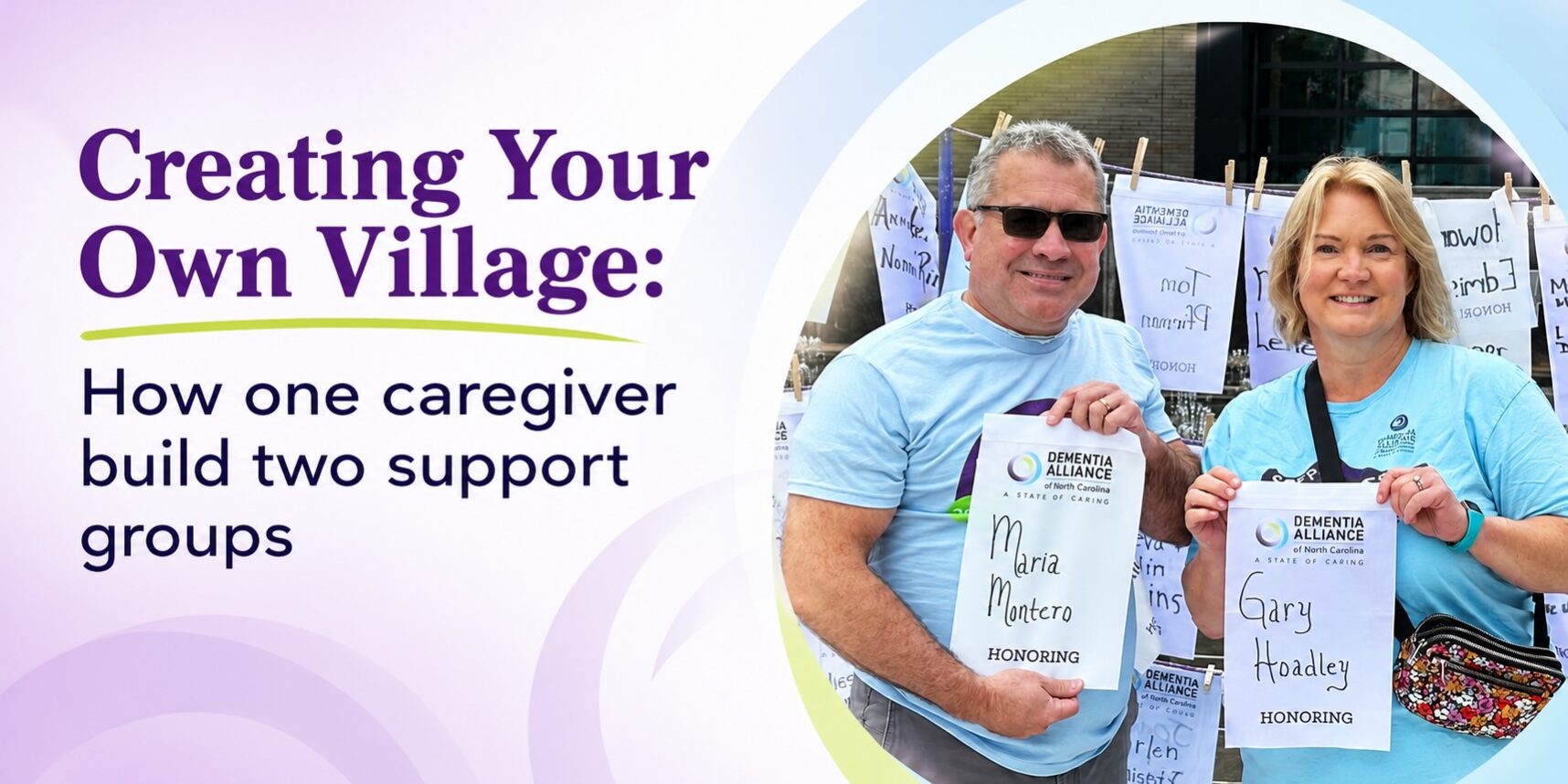
Most dementia caregiving begins without a roadmap.
It’s learning as they go, balancing changing needs, difficult decisions, and the rest of everyday life. Kathy Montero of Apex knows that feeling well.
Fourteen years ago, she and her husband were raising their children while caring for all four of their parents. Two had Alzheimer’s disease, and two developed vascular dementia. The responsibility was enormous, and the journey often felt lonely and uncertain.
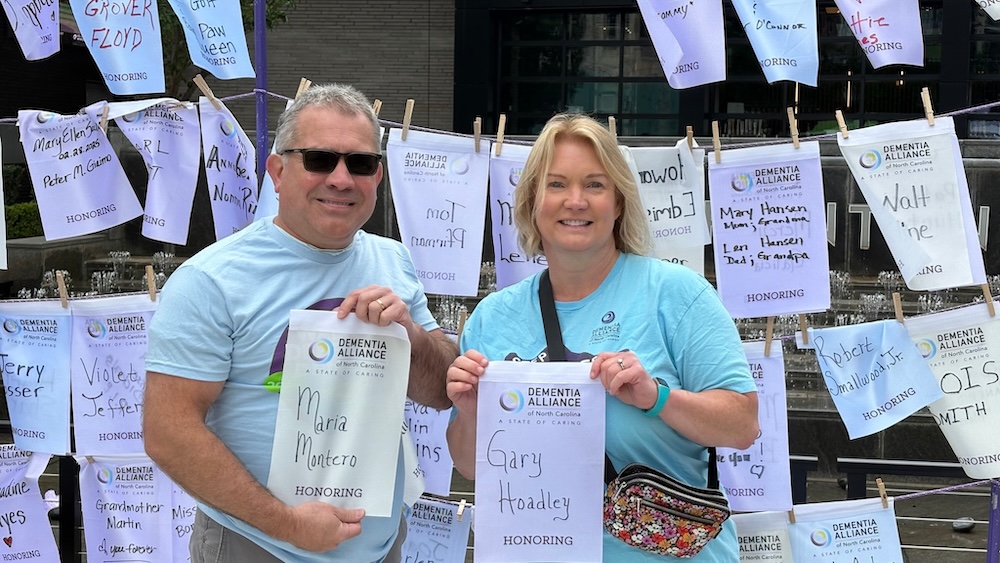 Then Kathy found a Dementia Alliance of North Carolina (DANC) support group and discovered something every caregiver needs: a village.
Today, she leads two support groups in Cary and Apex. One of her support groups meets on the third Tuesday of each month at the Cary Senior Center, and the other on the fourth Wednesday at Apex UMC. In both groups, she sits with people facing their own dementia caregiver journeys, helping others find the understanding, resources, and hope that once helped her.
Since 2020, over 75 caregivers have joined these groups, each experiencing what Kathy calls “building your village.” After 14 years of caring for four parents and raising her own children, she understands why that village is so important.
The Call to Lead: Why Kathy Became a Support Group Leader
In 2020, someone in the Cary support group noticed Kathy’s strengths and asked her to take on a new role as support group leader.
It would have been easy for Kathy to say no. She was still caring for two remaining parents, but she became aware of something many people only learn through experience: the support group that helped her needed leaders, and she could step up. It would have been easy for Kathy to say no. However, from her experience, she was aware of the importance of support groups, and when her group needed help, she stepped up.
“I keep going because the need is simply too great to walk away,” Kathy says. “Caregivers reach out when they are completely exhausted, overwhelmed, and feeling like they’re navigating an impossible system all on their own. There are still far too many family caregivers whose daily burdens and quiet sacrifices go completely unseen.”
Kathy started by leading one group in Cary, but things grew from there. She began volunteering with Sage Crossing, a program for people with cognitive changes, and saw that their families also needed support. In February 2026, she started a second support group at Apex UMC.
Now, every month, Kathy leads two caregiver groups, which continue to grow.
Laughter and Listening: The Secret to Her Groups’ Success
Over the years, Kathy has learned that leading these support groups isn’t about having all the answers. It’s about making sure caregivers feel truly understood.
“The most challenging aspect is fighting the instinct to solve every problem brought into the room,” Kathy admits. “It takes intentional discipline to sit with someone’s pain without rushing to offer a fix. I constantly remind myself that my primary role isn’t to be a problem-solver, but to practice deep listening and create a safe space where members feel genuinely validated and supported.”
During a journey full of loss and uncertainty, laughter helps heal, and connection brings hope.
When Caregivers Come Back
One moment means the most to Kathy: when a caregiver comes back to the group after their loved one has passed away.
“I am always so moved when a caregiver comes back to our group after their loved one passes,” Kathy says. “Taking the time to share the end of their caregiving journey is such a generous act of love for the rest of the group. It really shows just how strong and meaningful the relationships here truly are.”
These moments remind Kathy why she continues. Support groups turn isolation into community. They bring strangers together to share the hardest parts of their journeys, and even after those journeys end, the group stays connected.
What Kathy Wants Every Caregiver to Know
If there’s one thing Kathy hears repeatedly from people unfamiliar with dementia, it’s this question: “Do they still know who you are?”
“Recognition only tells a fraction of the story,” Kathy says. “The real difficulty for caregivers isn’t just memory loss. It’s learning to navigate a thousand unpredictable behavior changes that no one ever warned them about.”
This is the part no one talks about. The exhaustion comes not just from the diagnosis, but from the daily unpredictability, the changes in behavior, and the times when nothing makes sense and there’s no guide to help.
That’s why her groups are so important. In these circles, caregivers don’t have to explain the hidden struggles or justify why they’re tired, frustrated, or grieving someone who is still with them. They just need to show up.
By showing up, they find what they need most: understanding, hope, and a community that truly understands what they’re going through.
The Role of Partnership in Kathy’s Work
When Kathy was overwhelmed as a caregiver, DANC was there, connecting her to key resources and helping her navigate the cloud of uncertainty.
Today, as a support group leader, DANC remains essential to her work. The organization provides the continuous support, education, and structure Kathy needs to guide others through their own dementia journeys. Beyond word of mouth, DANC also helps connect caregivers to her groups.
“DANC has been such an integral part of my life as both a caregiver and as a support group leader,” Kathy says. “They empower leaders so we can, in turn, empower families, creating a ripple effect of hope across our community.”
It’s a reminder that the most meaningful work doesn’t happen in isolation. It happens when organizations and leaders work together, each supporting the other toward one shared goal: helping caregivers feel understood and equipped.
To Caregivers Reading This
If you’ve never tried a support group, feel overwhelmed, or are caring for someone and feel completely alone in this difficult system, here’s what Kathy wants you to know:
● You don’t have to navigate this impossible system on your own.
● You don’t have to hide your exhaustion.
● You don’t have to solve this alone.
It’s about showing up.
Every month, caregivers meet in two rooms in Cary and Apex. They share stories, laugh together, and find resources, connection, and hope. They’re building their own village.
“Giving caregivers a sense of hope and community is such a powerful gift,” Kathy says. “So many people join a support group when they are at their wits’ end. Feeling truly understood and finding hope amidst the chaos can be a complete lifeline.”
There’s a seat for you here. You don’t have to go through this by yourself.
If you live in the Cary or Apex area, meet Kathy at one of her Support Groups.
Cary – 3rd Tuesday each month at Cary Senior Center from 10:00 – 11:30 a.m.
Apex – 4th Wednesday each month at Apex UMC from 10:00 – 11:30 a.m. (Dates in Nov/Dec vary around holidays)
If you don’t live in Cary or Apex but want to find a similar group near you, find a Support Group near you.